How a town grows
You don't build houses. You mark out land and give people a reason to come: a road to reach it, water to drink, and a sheriff to keep the peace. Settlers do the rest.
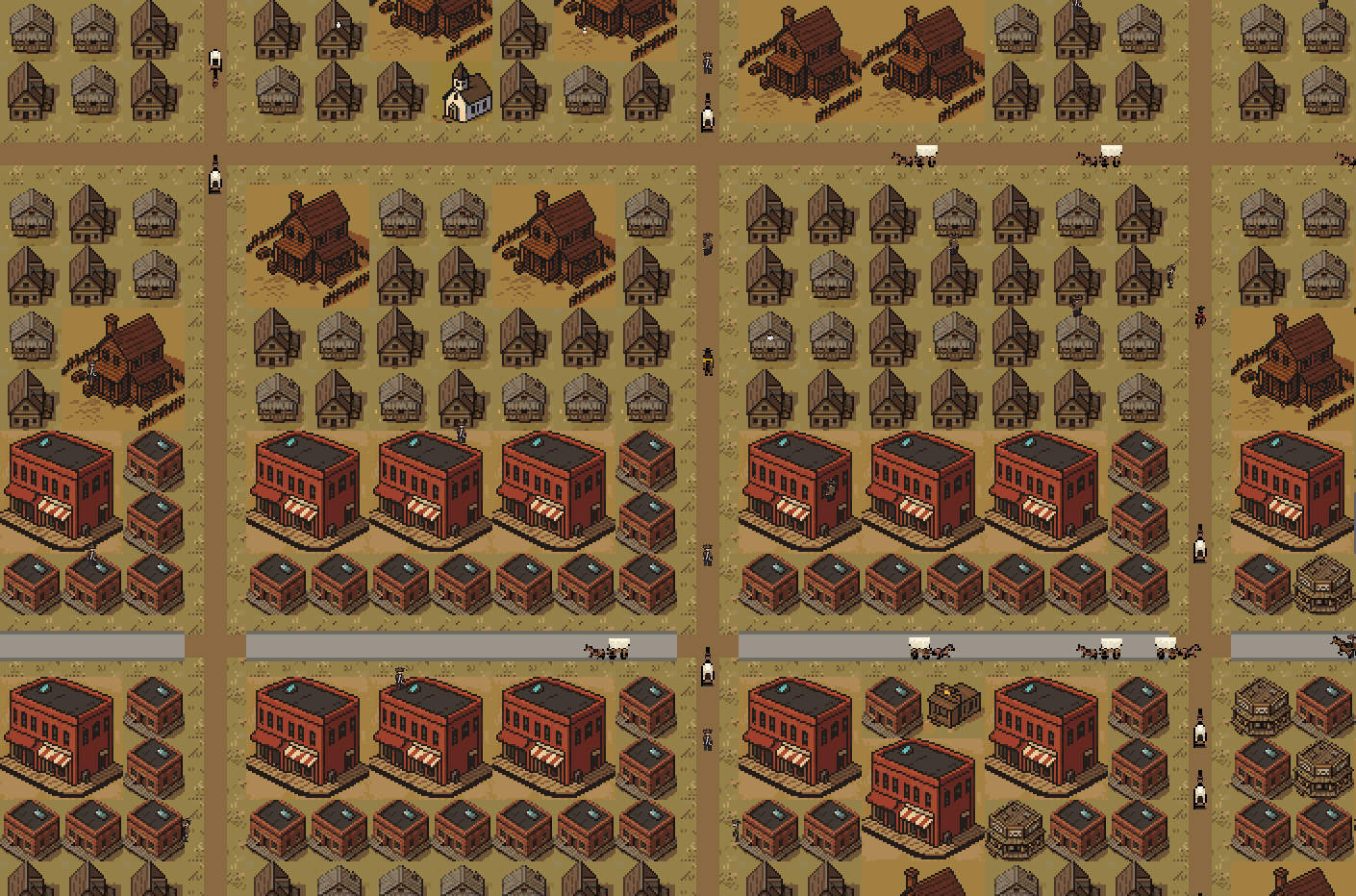
Homesteads and Main Street
Drag out land along your trails. Cabins become houses and then big family homes. Stores and saloons become brick blocks that rise a storey at a time.
Cobblestone costs ten times as much as dirt, and the lots beside it end up worth ten times the tax.
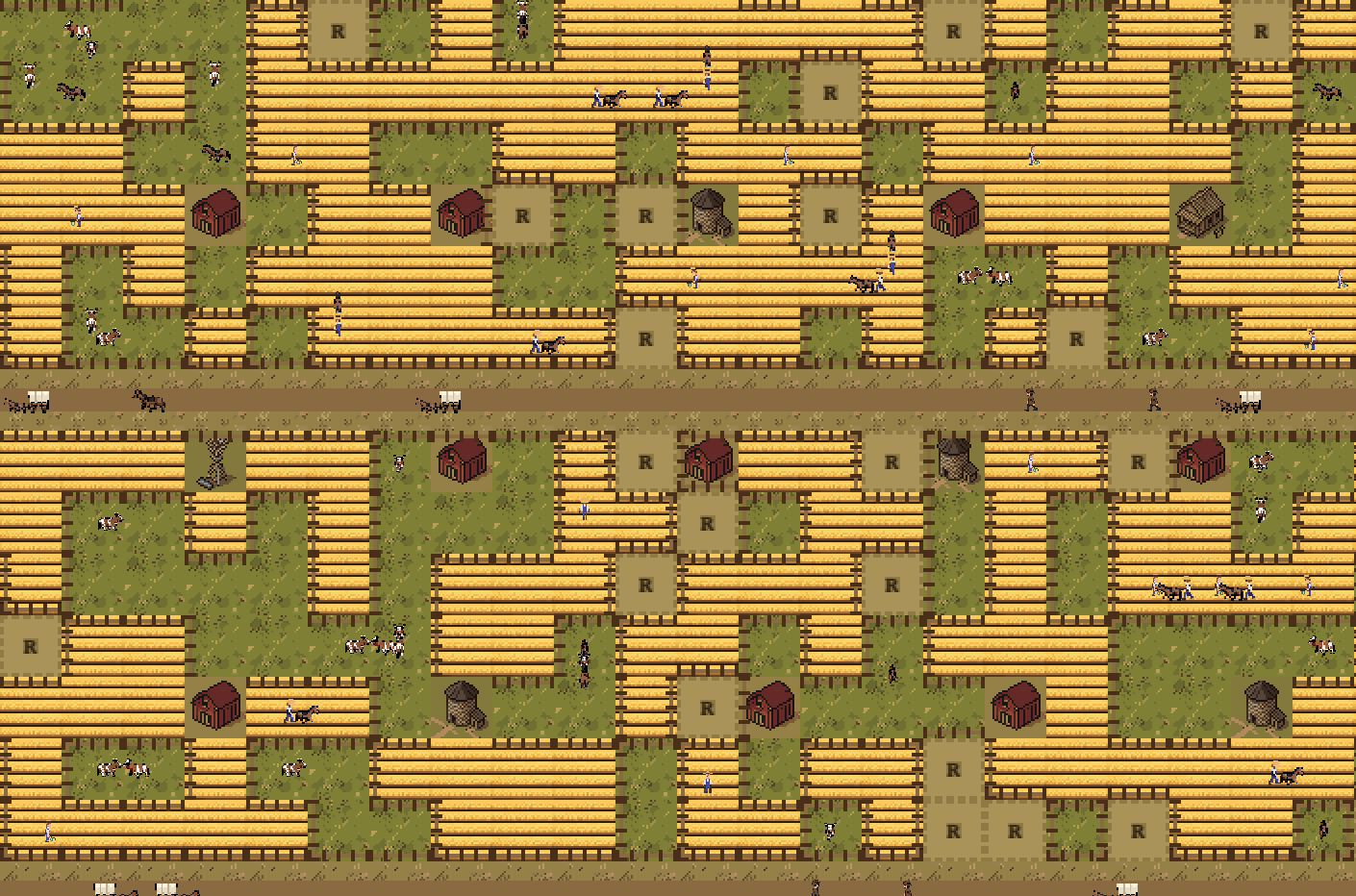
Farms that spread
Zone ranch land up to five tiles back from a road, ten once you're a city. Fences go up post by post, barns and windmills appear, cattle graze and ploughmen work the wheat.
As your town gets bigger, the farms buy up the open land next door.
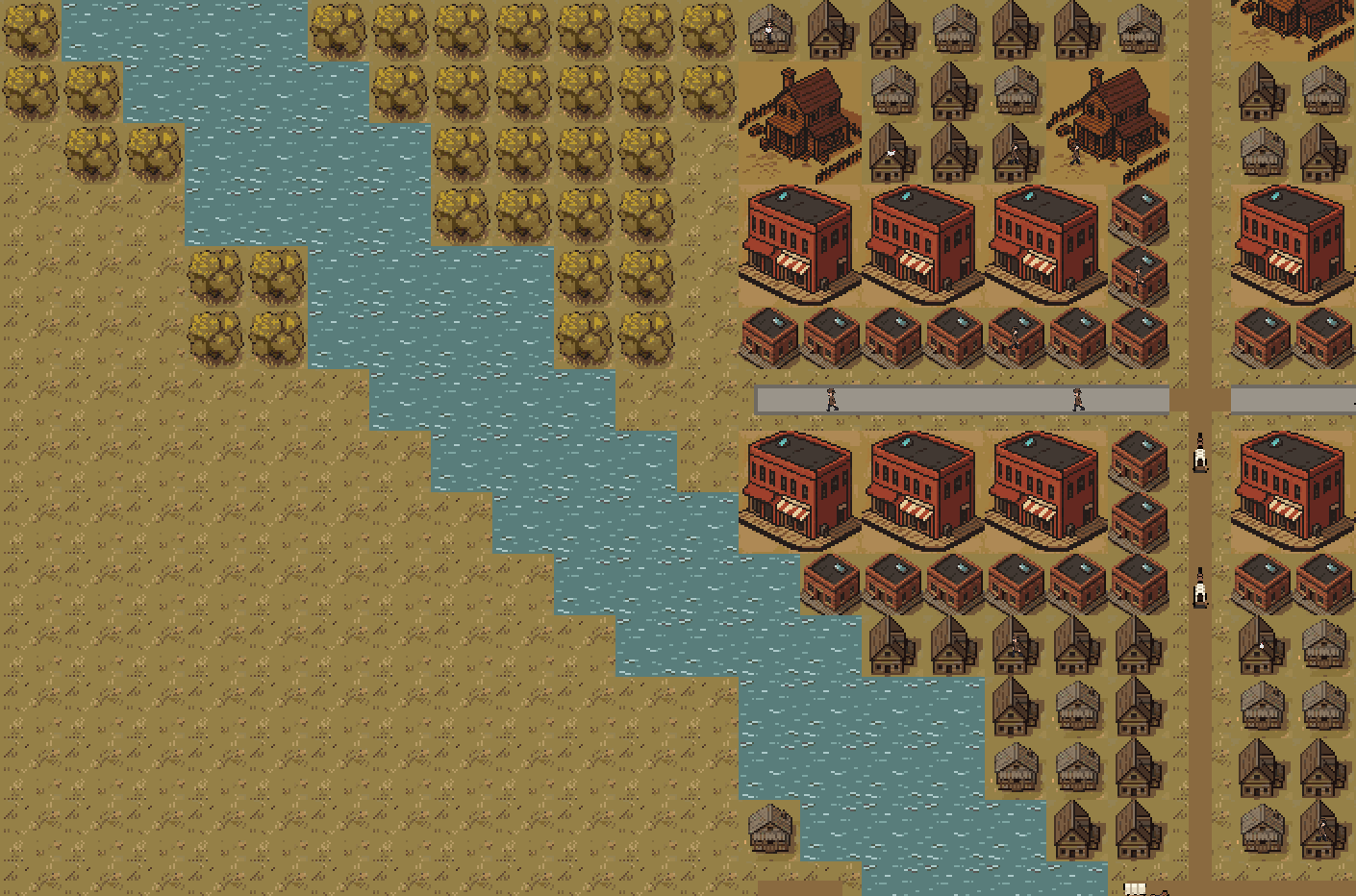
Water and the law
Nothing grows without water. Dig wells, run ditches from the river and put up water towers. Water runs in pipes under your roads.
Hire sheriffs to keep bandits off the streets, and set the tax rate each year to fund them, the roads and the water.
From camp to county seat
Every new title opens up new buildings. Your townsfolk will ask for them, and if you keep them waiting too long they'll pack up and leave.
- CampYour first settlers
Trails, wells, homesteads, Main Street and ranches.
- Settlement200 people
A saloon, the schoolhouse and a town green.
- Town1,000 people
The railroad and the dock, a fire brigade, the bank, a doctor and the post office.
- Boomtown2,500 people
Hotels for travellers and a brewery to buy the grain.
- City5,000 people
The opera house, a park with a bandstand, gas lamps, paddle steamers and bigger farms.
- Big City10,000 people
A college and the county fair.
- County Seat20,000 people
The courthouse, and a cavalry fort to end bandit raids.
Your town is waiting
Play as a guest, or sign in with your email to save up to three towns and pick them up on any computer or phone.
Play in your browser